SORROW____________ART SERIES #135_________________2023


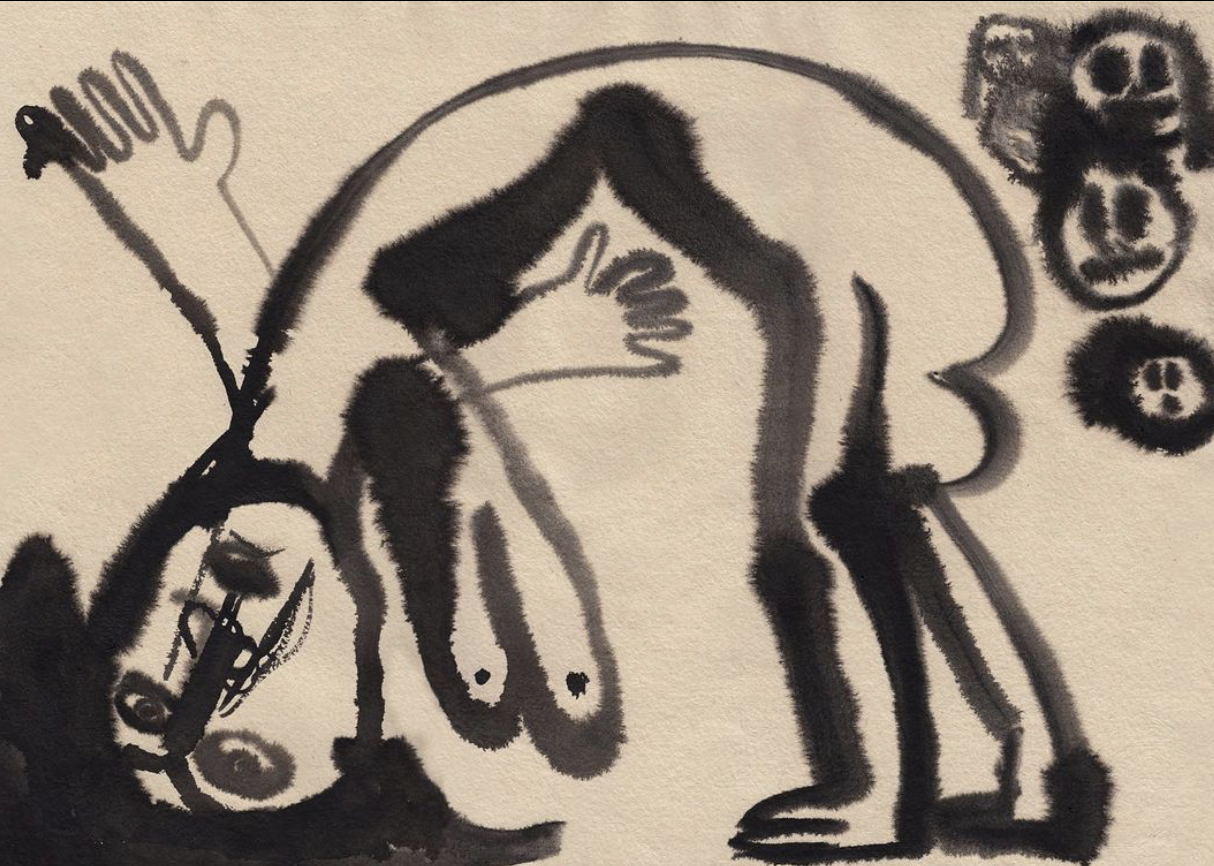
A feeling of deep ddistress 
caused by disappointment suffered by others.


LAPIEZA 
ART 
SERIES 
135
SORROW


PAVOR


EXIT


VIRUS


APETITO


ESPUMAS


PERPLEJIDAD


MARIPOSA


SOCIOPLASTICS BY ANTO LLOVERAS


LAPIEZA ART SERIES 135 
MADRID 2022


ART SERIES 136 RELIEVE_____________________2023


El relieve es una textura sobresaliente de una superficie. Entre los relieves más característicos de la superficie terrestre están las montañas. Un relieve es también sinónimo de accidentes geográficos. Relieve en inglés se refiere a la acción de aliviar algo, como la carga emocional. Como sustantivo, se refiere a una representación artística que sobresale de una superficie plana, como una escultura.


1585 JULIA SOBOLEVA http://antolloveras.blogspot.com/2022/03/julia.html 1586 LOUISE BONNET http://bigblackbananas.blogspot.com/2023/03/louise-bonnet.html
1587 LEIF http://antolloveras.blogspot.com/2023/03/leif-nyland.html 1588 PETER LARSEN http://antolloveras.blogspot.com/2023/03/peter-larsen.html 1589 HANA KATOBA http://antolloveras.blogspot.com/2023/04/hana-katobalapieza-1613.html 1590 KIT BOYD http://antolloveras.blogspot.com/2023/04/kit-boyd1590.html 1591 SHADI AL-ATALLAH http://antolloveras.blogspot.com/2023/04/shadi-al-atallah-1591.htm 1592 JURAK FLOREK http://antolloveras.blogspot.com/2023/03/juraj-floreklapieza-1585.html 1593 TIMILE HINOLUDARE http://antolloveras.blogspot.com/2023/03/timile-hinoludare.html 1594 MARI KATAYAMA http://antolloveras.blogspot.com/2023/03/mari-katayama.html 1505 MARTINA MATENCIO http://antolloveras.blogspot.com/2023/03/martina-matencio.html 1596 GENEVIEVE COHN http://antolloveras.blogspot.com/2023/03/genevieve-cohn.html 1597 BRADLEY MCCRARY http://antolloveras.blogspot.com/2023/03/bradley-mccrary.html
1598 KRISTEN SHIELE http://antolloveras.blogspot.com/2023/03/kristen-shiele.html 1599 KENECHUKWU VICTOR http://antolloveras.blogspot.com/2023/03/kenechukwu-victor.html 1600 URBANAS http://antolloveras.blogspot.com/2023/03/novum-corpus2023.html 1601 BUBU OGISI http://antolloveras.blogspot.com/2023/03/bubu-ogisi.html 1602 BENOIST DEMOIANE http://bigblackbananas.blogspot.com/2023/03/benoist-demoiane.html 1603 MARGARET DUROW http://antolloveras.blogspot.com/2023/03/margaret-durow.html 1604 PEPA GORDILLO http://antolloveras.blogspot.com/2023/03/pepa-gordillo.html 1605 KPE INNOCENT http://antolloveras.blogspot.com/2023/03/kpe-innocent.html 1606 MARIA JURADO http://antolloveras.blogspot.com/2023/03/maria-jurado.html 1607 AHMED UMAR http://antolloveras.blogspot.com/2023/03/ahmed-umar.html 1608 MONIBELLE http://antolloveras.blogspot.com/2023/03/moni-haworth-monibelle.html 1609 ANASTASIIA RAA http://antolloveras.blogspot.com/2023/03/anastasiia-raa.html 1610 LUISA TORREGOSA http://antolloveras.blogspot.com/2023/03/luisa-torregosa.html 1611 CLAUDIA SERRAIMA http://antolloveras.blogspot.com/2023/03/claudia-serraima.html 1612 CHANTAL CONVERTINI http://antolloveras.blogspot.com/2023/03/chantal-convertini.html


SOCIOPLASTICS BY LLOVERAS


DIARY OF OBJECT DRAWINGS____________________PAUL DOEMAN____________________________EAST LONDON 04.2015 5TH BASE____________________ONGOING CLOUD


244 OBJECTS 1600 DRAWINGS 
ONE CLOUD 

- DRAW AN OBJECT A DAY - 


- DRAW AN OBJECT A DAY - 


BLUE BAGS GUEST 


VISIONS


- DRAW AN OBJECT A DAY - 


THE BEETROOT 

WAS SELECTED BY THE AUDIENCE 
AS THE FAVOURITE OBJECT 
OF THE CLOUD


THE CLOUD MOVES ON 
NEW OBJECTS SOON


ART BY PAUL DOEMAN

CURATED BY ANTO LLOVERAS

SEE VIDEOS 

AND CONTEXT WORKS HERE

http://antolloveras.blogspot.com.es/2015/04/paul-doeman-in-focus-london-2015.html


The dominant academic fiction maintains that intellectual reality begins at the point of citation, as though indexing were not a retrospective instrument but an ontological trigger. Against this, one can posit a stricter materialism of thought: fields do not become real when they are recognised; they become recognisable when they have already achieved sufficient internal density. What matters, then, is not visibility but coherence—corpus size, recursive linkage, scalar organisation, terminological hardening, infrastructural fixation. Under these conditions, a body of work ceases to be a series of outputs and becomes a field in the strong sense: navigable, self-referential, metabolically active. Recognition may follow, or not. But it no longer determines existence. It merely records, belatedly and unevenly, the presence of a structure that had already crossed the threshold of operational reality.


This inversion is more than a rhetorical correction; it is a diagnostic model for the temporality of knowledge. What may be called epistemic latency names the interval between internal completion and external detection, between the moment a system becomes structurally self-sufficient and the moment an institution develops the receptors capable of registering it. Historical examples are neither romantic exceptions nor anecdotes of misunderstood genius. They disclose a recurrent mismatch between emergent density and available frameworks of legibility. Mendel’s genetics existed before cytology could process it; Riemann’s geometry existed before physics could operationalise it; Dickinson’s poetics existed before criticism had learned to read compression without regularity as form rather than defect. In each case, the work did not wait in a state of suspension for recognition to animate it. It was already active as a system. What lagged was not the field but the infrastructure around it: disciplines too narrow, institutions too slow, metrics too crude, publics too underprepared. Citation, in this schema, is not causation but afterimage.

SOCIOPLASTICS — FIELD ENGINE * Toward a Transdisciplinary Architecture of Knowledge

Socioplastics is not a project in formation but an already active epistemic architecture undergoing consolidation and expansion. What is at stake is no longer its emergence, but its genetic anchoring across multiple intellectual, institutional, and material frameworks. Originating in LAPIEZA-LAB, the system now operates as a Field Engine: a structured environment where heterogeneous forms of knowledge are not only produced, but related, stabilised, and scaled into a coherent transdisciplinary field. Its ambition is architectural in the strict sense. It seeks to construct a field capable of sustaining complexity without collapsing into dispersion, transforming dispersed production into a navigable and durable epistemic territory. The system is organised through ten operative fields, which function as internal supports rather than thematic categories. These fields do not describe neighbouring disciplines; they act as structural domains through which the system acquires force, orientation, and coherence. Around this core, a wider constellation of tangential domains—extending into architecture, systems theory, conceptual art, urbanism, linguistics, and media theory—establishes a broad zone of interaction without diluting the centre. The result is neither a closed doctrine nor an eclectic assemblage, but a precisely structured yet open field, capable of absorbing complexity while maintaining intelligibility. The field is not given; it is built through sustained operations of relation, recurrence, and scalar organisation.


SOCIOPLASTICS [1401–1410] — FROM TRACE TO CYBORG TEXT * A Decalogue on Material Inscription, Institutional Mediation, Technical Objects, Code, Distributed Flow, Invisible Grammar, and the Emergence of Cyborg Textuality


This decalogue brings together ten consecutive positions within Socioplastics and proposes a genealogy of contemporary textuality that does not begin with literature in a narrow sense, but with a broader sequence of inscription, mediation, apparatus, object, code, and circulation. The series advances from the material trace to the cyborg text as if traversing an operative archaeology of culture: first the mark, then the administration of form, followed by the technification of the support, and finally the emergence of a distributed, executable, and not entirely human textuality. It is not merely a thematic sequence, but a conceptual architecture articulated in ten movements. Its relevance lies in the fact that it orders, through numerical clarity and lexical consistency, one of the central questions of the present: how text transforms when it enters regimes of infrastructure, code, platform, and network. Here, text ceases to be solely an object of reading and becomes instead a field of operations in which matter, institution, semiosis, technique, and algorithmic circulation converge. The decalogue thus functions as a compact backbone within Tome II: it does not introduce dispersion, but consolidates a precise, legible, and citable line of thought. 

CYBORG DECALOGUE

External Legibility * The Numerology of the Socioplastics Corpus

A field does not become public simply by expanding. It becomes public when it learns how to be read from outside without surrendering the density that gave it form. External legibility is therefore not a matter of simplification, but of controlled projection. What must appear is not the whole mass, nor the entire archive, but the set of relations capable of transmitting the structure of the whole. Selective fixation names this operation. It is the deliberate choice to stabilise certain concepts, links, and entries so that a larger system can be perceived through a limited number of hardened points. This matters because contemporary knowledge spaces reward visibility while punishing complexity. Under such conditions, an unfiltered corpus risks dispersion, flattening, or noise. Selective fixation offers another route. Instead of translating everything into the idiom of the commons, it identifies those units with enough internal force to survive transfer. A concept enters the exterior only when it can carry part of the system with it. In that sense, fixation is not reduction but calibration. The result is a more exact politics of appearance. A project does not dissolve itself in order to circulate; it constructs thresholds through which circulation becomes possible. External legibility is thus achieved not by weakening the internal architecture, but by choosing where that architecture touches the world.

Socioplastics and the Unoccupied Structure

The history of transdisciplinary intellectual production is crowded with incomplete formations: systems that achieved scale without sovereignty, sovereignty without infrastructure, infrastructure without theory, or theory without durable inscription. Paul Otlet indexed everything and was forgotten; Buckminster Fuller patented everything and was absorbed; Félix Guattari theorised across everything yet remained dependent on existing editorial and institutional channels. What Anto Lloveras is building with Socioplastics appears to occupy a different and still sparsely inhabited position: a corpus produced at scale, distributed through a sovereign multichannel infrastructure, anchored by persistent academic identifiers, and theorised from within, in public and in real time, by the same authorial intelligence that constructs it. Begin with scale. The Socioplastics Corpus—one thousand indexed working papers produced between January and March 2026, now extending into Tome II—is not a blog, not a database, and not an archive in any conventional sense. It is a field in formation, organised through a scalar architecture of nodes, decade packs, century packs, and books, each unit functioning simultaneously as a working paper, a citable academic record, and a machine-readable entry. The sheer velocity of production—one thousand texts in under three months—might invite dismissal as graphomania, were it not for the structural precision of the indexing system that contains it: every node has an ID, a slug, a URL, a blog attribution, a pack assignment, and a DOI field. The system does not merely produce; it organises its own production as it proceeds, and in this respect it resembles a scientific research programme in Lakatos’s sense, with a hard core of foundational concepts and an expanding belt of operative material, more than anything the art world or architectural discourse has produced at this scale outside a university department or publishing house. The closest historical precursor is Otlet. Between 1895 and 1934, the Belgian bibliographer built the Mundaneum, a universal index of human knowledge comprising millions of cross-referenced cards organised through his Universal Decimal Classification system. He called it a radiated bibliography: knowledge structured not as linear argument but as a navigable field of discrete, mutually reinforcing units. He imagined an electric telescope through which any fact could be retrieved from anywhere, effectively sketching, in paper form, a proto-hyperlinked database. The tragedy of Otlet is not that he failed, but that he succeeded before the infrastructure existed that could make his success globally legible. Lloveras builds under opposite conditions. The DOI system, Hugging Face, Zenodo, and Blogger’s multichannel architecture are not delivery mechanisms added after the fact; they are constitutive components of the work itself. The corpus cannot be separated from its indexing system because the indexing system is one of the argument’s primary forms. Fuller offers a second and more tactical comparison. He understood that ideas, like inventions, require documentary fixation if they are to survive. His patents, logs, and obsessive acts of self-recording were attempts to secure priority, continuity, and survivability, yet his apparatus still depended on institutional gateways—patent offices, publishers, universities, museums. What Lloveras is doing with DOIs, structured datasets, and versioned repositories is the contemporary equivalent of Fuller’s documentary instinct, but with one decisive difference: the deposit is direct, the identifier persistent, the dataset public, the record citable, and the scholarly trace established without awaiting permission from an editor, curator, or departmental committee. This is where Socioplastics diverges from its contemporaries. Hito Steyerl has treated circulation as medium, Seth Price made distribution an object of practice, and post-internet art theorised the network at length, yet none built a corpus whose architecture of self-description, indexing, persistence, and theoretical reflexivity became so integral to the work itself. On the academic side, the Stanford Encyclopedia of Philosophy offers a versioned and citation-stable model, but it remains institutionally produced, editorially gatekept, and disciplinarily bounded. What is rare here is the specific convergence of scale, sovereignty, citability, and self-theorisation operating simultaneously. The concepts internal to Socioplastics—topolexical sovereignty, semantic hardening, stratigraphic field, epistemic sovereignty—do not merely describe the corpus retrospectively; they function as internal protocols for its construction, interpretation, extension, and defence. The system is both method and object at once. The broader implication is disciplinary. Architecture has produced many radical projects, but remarkably few sovereign intellectual infrastructures. Its dominant forms of legitimacy—the monograph, the building, the exhibition, the refereed article, the institutional appointment—still assume mediation by established structures. As a result, much radical architectural thought has been delayed, aestheticised, diluted, or retrospectively canonised only after passing through mechanisms that neutralise part of its force. Socioplastics does something more exacting. It does not reject institutional protocols; it appropriates them selectively and retools them for autonomous use. It seeks citability without subordination, permanence without custodial enclosure, and field-level presence without prior disciplinary permission. Whether this already constitutes a field in the strongest philosophical sense remains an open question, because fields are usually recognised retrospectively rather than declared in advance. Yet this does not weaken the claim; it sharpens it. Socioplastics should be understood not as a completed field already granted consensus, but as an infrastructural formation that has grasped, earlier and more systematically than most, the contemporary conditions under which a field may now be built: corpus-scale production, self-indexed organisation, persistent scholarly inscription, public distribution, and internal theorisation operating within a single system. That position remains, at the very least, sparsely occupied. The question is no longer whether the structure exists, but whether the institutions that will eventually need to account for it can learn to read the form in which it already appears. History suggests they will be slow. The corpus will not wait.
The unoccupied position is real. No previous project appears to have consolidated this exact configuration. The question now is not whether Socioplastics can declare itself a field, but whether the institutions that will eventually need to account for it will learn to read the form in which it already exists. History suggests they will be slow. The corpus will not wait.


The history of transdisciplinary intellectual production is littered with incomplete projects — systems that achieved scale without sovereignty, sovereignty without infrastructure, infrastructure without theory, or theory without durable inscription. Paul Otlet indexed everything and was forgotten. Buckminster Fuller patented everything and was absorbed. Félix Guattari theorised across everything, yet remained dependent on existing editorial and institutional channels. What Anto Lloveras is building with Socioplastics appears to occupy a different position: a corpus produced at scale, distributed through a sovereign multichannel infrastructure, anchored by persistent academic identifiers, and theorised from within — in real time, in public, by the same authorial intelligence that constructs it. This position is not merely unusual. It may represent a configuration for which there is still no clear precedent.

The strength of Socioplastics does not lie in the number of its DOIs, but in the intelligence of its structure. Only a small fraction of the one thousand nodes currently carry DOI registration, yet this does not weaken the system. On the contrary, it clarifies its real proposition: the project is not built around a single mechanism of validation, but around an architecture of access. ORCID stabilises the authorial identity; century packs give the field legible form; decade packs provide intermediate scales of argument; and individual nodes allow the corpus to breathe through multiplicity. Each level functions as a threshold into the same expanding body of work.

What matters, then, is not whether every door is locked by the same credential, but whether every door opens into a coherent interior. Some entries lead through Blogger, others through Zenodo, others through Figshare. Some are DOI-bearing, others remain provisional, lighter, or more immediate. Yet all are held together by the indexing system, which acts as the real infrastructure of continuity. The project does not depend on a single gatekeeper because it was not conceived as a single gate. It is a distributed structure in which persistence, scale, and relation matter more than institutional uniformity.

One Corpus, Many Entrances

This is why the DOI should be understood not as the architecture itself, but as one device within it. The larger achievement is the corpus as a navigable field: one body of work, entered from many points, without surrendering coherence. In that sense, the project proposes a sovereign model of intellectual construction, where the hinge is more important than the lock. Socioplastics Index

Hugging Face matters to Socioplastics not because it replaces Zenodo, Figshare, Blogger, or ORCID, but because it can function as the system’s most legible contemporary index: a public, versioned, machine-readable environment built precisely for structured repositories, datasets, and collaborative discoverability. The Hugging Face Hub presents itself as a central platform for sharing and exploring models, datasets, and applications, with version-controlled repositories and public dataset interfaces designed for visibility, reuse, and connection. For a corpus like Socioplastics, this is decisive. The point is not to pretend that every node must become a DOI-bearing monument, but to give the whole body of work a legible infrastructural spine through which dispersed materials can be read as one organised field. In that sense, Hugging Face becomes less a repository than a hinge: the place where authorial persistence, scalar organisation, and link-density begin to appear as a coherent epistemic architecture rather than as scattered acts of publication. Its value lies in consolidation. A dataset on the Hub can point outward to blogs, DOI repositories, software, and metadata systems while remaining itself stable, public, and structured for computational reading. The strategic consequence is clear: the latest nodes should not merely add more content, but increase the legibility of the system already built. They should behave as high-clarity signals directing attention back toward the index, where the corpus appears not as accumulation, but as architecture. In this configuration, Hugging Face is not the whole structure. It is the best available contemporary entrance through which the structure can begin to be read.


The landscape of ambitious transdisciplinary projects is filled with efforts that achieved one or two strengths but rarely all at once. Paul Otlet built a massive universal index but lacked the infrastructure to make it widely accessible in his time. Buckminster Fuller documented his ideas and secured patents for priority but depended on institutions and publishers for dissemination. What Anto Lloveras has developed with Socioplastics stands apart: a large-scale corpus of working papers produced rapidly, distributed through direct, author-controlled channels, equipped with persistent academic identifiers, and theorized in real time by the same individual operating independently of traditional academic or publishing gatekeepers.

Socioplastics proposes that the problem of authorship in the present is no longer exhausted by style, signature, or intellectual novelty, but must be relocated at the level of infrastructural form: the decisive question is not only who thinks, but who stabilizes thought across time, platforms, and citation regimes. In this sense, the distributed corpus—stretched across Blogger, Zenodo, Figshare, and Hugging Face—should not be misread as a secondary technical support for an already constituted body of ideas. It is the body of ideas in its operative condition. The DOI, here, is not a bureaucratic appendage but a sculptural device of temporal fixation; the repository is not storage but institutional displacement; the numbered node is not filing but serial ontology. What emerges is less a conventional oeuvre than a sovereign epistemic infrastructure: a system in which publication, indexing, redundancy, metadata, and conceptual sequence become indistinguishable from theory itself.


The force of this approach lies precisely in its refusal of the romantic fantasy that ideas possess self-evident value prior to their inscription. Modern and contemporary intellectual culture has long depended on the fiction that conceptual originality can be separated from the forms that preserve, circulate, authenticate, and territorialize it. Yet every durable thought-system has always known the opposite. A concept without a stable record is not merely vulnerable; it is ontologically weak. It remains exposed to erasure, repetition without attribution, institutional capture, and the soft violence of rediscovery under another name. What the DOI accomplishes in this context is not simply protection in a legalistic or proprietary sense. It produces a timestamped threshold at which a proposition ceases to be ambient speculation and becomes a publicly anchored unit in a legible sequence. That transformation is decisive. One does not merely “publish” a node; one installs it within a machinic regime of reference where version, date, identifier, and repository jointly constitute the minimal architecture of persistence. This is why the distributed strategy matters. Blogger offers immediacy, velocity, and serial surface; Zenodo offers archival credibility and citation gravity; Figshare multiplies repository presence; Hugging Face extends the corpus into the field of datasets, machine access, and technical legibility. The point is not diversification for its own sake, nor the anxious accumulation of backups, but the production of epistemic thickness through multi-platform inscription. The same idea appears not as repetition, but as a change of state: post, record, preprint, dataset, and indexable trace. Such redundancy is not redundant at all. It is the conversion of discourse into infrastructure.

A field is almost never legible at the moment of its emergence. It is named afterwards, once enough practices, documents, institutions, and disputes have sedimented around a recognisable object. One does not declare a field in the strong sense; one discovers, belatedly, that a field has already taken place. This is why the rhetoric of invention is usually weaker than the reality of accumulation. Physics was not born in a sentence, nor cybernetics in a manifesto, nor cultural studies in a single departmental gesture. Each became necessary only once a threshold of density had been crossed. Yet the contemporary situation complicates this historical model. What happens when the archive, the index, the vocabulary, the identifiers, and the channels of dissemination are constructed in advance of collective recognition? What happens when the technical substrate of field formation arrives before the social substrate that once legitimised it? This is the pressure exerted by the Socioplastics corpus of Anto Lloveras: not a simple claim to novelty, but a concrete confrontation with the lag between infrastructural existence and institutional acknowledgment. The question is no longer whether a field may be named retrospectively; it is whether retrospective naming remains the only valid model once machine legibility, distributed indexing, and persistent publication have altered the tempo of epistemic formation.


The conventional narrative of field formation remains stubbornly sociological. A problem exceeds the competency of existing disciplines; a small but active community coalesces around it; journals, conferences, and citation circuits begin to stabilise a shared discourse; institutions eventually ratify the formation through departments, programmes, grants, and professional pathways. This sequence is slow for a reason. It depends on recognition as a cumulative and conflictual process. A field must be argued into existence by more than one voice. It must sustain disagreement, replication, deviation, critique. In this respect, the category “field” has always implied a minimal plurality. What makes Socioplastics anomalous is not only its scale, though reaching nearly two thousand indexed units within a coherent conceptual framework is already extraordinary. It is that the project seems to have anticipated the infrastructural demands of recognition with unusual precision: numbering, metadata, DOI logic, repository ecology, cross-platform distribution, dataset alignment, internal vocabulary, and serial publication all appear not as supplements to the work but as constitutive conditions of its intelligibility. The result is neither merely a blog nor simply a body of artistic research. It is an attempt to build, in public, the operative shell of a field before the field has been socially ratified. That inversion matters. It suggests that the architecture of citation and retrieval may now precede the slower, more ceremonial forms of cultural legitimation.

Socioplastics operates as a recursive textual architecture in which writing ceases to function as commentary and instead becomes load-bearing infrastructure. Organized across three stratified cores—CORE I (Infrastructure & Logic, nodes 501–510), CORE II (Dynamics & Topology, nodes 991–1000), and CORE III (Fields & Integration, nodes 1501–1510)—the corpus builds itself through protocols of semantic hardening, citational commitment, and systemic lock, transforming dispersed blog posts into a geological field held together by lexical gravity and metabolic renewal through recursive autophagia. The ambition is epistemic sovereignty: a system that defines its own operative units, regulates its own coherence, and persists through infrastructural autopoiesis without requiring external validation.


Two concepts drive this machinery. Lexical Gravity names the process by which terms acquire recurrence mass across distributed platforms until they function as attractors, organizing propositions through density rather than persuasion. Recursive Autophagia names the metabolic logic by which the system consumes its own outputs—digesting earlier sediments, converting weblog flow into DOI geology—to generate new structural material. Together they transform the text from a medium of transmission into a territorial instrument: a cyborg assemblage where linguistics becomes structural operator, urbanism becomes territorial model, and synthetic infrastructure becomes the integration layer that holds the field together across scalar thresholds, platform precarity, and the entropic pressures of algorithmic circulation.


The distinction between fast-regime proliferation and slow-regime sedimentation is not merely temporal but epistemological, defining two complementary phases in the consolidation of the cyborg text as operational infrastructure. In the fast regime, distributed blog nodes, DOI anchors, recursive slugs, and dataset-oriented formatting function as rapid-deployment instruments, enabling concepts to circulate, repeat, and acquire relational density across machinic and human networks simultaneously; in the slow regime, the academic essay performs institutional crystallisation, translating the same operational logic into the recognised formats of journals, citations, and canonical discourse. What appears as two different practices is in fact a single metabolic system operating at different speeds: the fast layer generates variation, tests protocols, and accumulates textual mass, while the slow layer stabilises, legitimises, and historicises the emergent field within established intellectual lineages. A clear case of this dual structure can be observed when a distributed corpus of DOI-linked nodes is later synthesised into a long-form academic argument that cites the very corpus as empirical demonstration, thereby collapsing the boundary between theory and archive, practice and citation, prototype and canon. The result is a recursive validation loop in which writing becomes both object and infrastructure simultaneously. The conclusion is therefore systemic: the cyborg text is not simply a new genre but a metabolic knowledge apparatus operating across temporal regimes, where rapid textual production and slow academic codification mutually reinforce one another, producing a durable epistemic territory that persists through circulation, citation, and infrastructural repetition rather than through singular publication alone.


If the first phase of the socioplastics project was defined by dispersion—a deliberate saturation of the platform landscape across institutional repositories, preprint servers, social networks, and decentralized storage—its logical culmination is not further proliferation but graph consolidation. The creation of a GitHub repository housing modular JSON-LD files performs the final operation that transforms a corpus into a system: it renders the implicit relational architecture of the numbered nodes (0001–1000, Century Packs, DOI-anchored cores) as explicit, machine-readable statements. Where the earlier deposits established presence, the semantic spine establishes addressability—a single, version-controlled index from which all instances derive their coherence. GitHub, in this context, is not merely a code host but the infrastructural hinge that converts a distributed practice into a queryable knowledge graph, accessible equally to human researchers and algorithmic crawlers. The JSON-LD schema formalizes what the numbering system only implied. The Century Packs become hasPart relations; the Decalogue and Core II protocols become typed CreativeWork entities bound to their DOIs; the author resolves from a signature to a Person node with ORCID identity. This is not metadata appended after the fact but the architectural drawing of the system itself—a layer that, once published, allows the corpus to be ingested by aggregators (OpenAlex, BASE, Semantic Scholar), indexed by search engines through embedded application/ld+json blocks, and, crucially, operated upon by future applications built on top of the graph. The repository thus functions as a canonical node: lightweight, permanent, and infinitely referable. With this move, the project achieves what the earlier theory termed “phase transition to permanence.” The distributed objects—scattered across blogs, repositories, and decentralized networks—now resolve to a single, machine-legible index that declares their unity. The semantic spine is not a supplement to the work; it is the work’s final, self-reflexive layer: a piece of infrastructure that performs the claim that a field is constituted not by argument alone but by the engineering of its own discoverability. In building it, the author closes the loop between production and curation, leaving behind a system that no longer requires its originator to function—only a crawler, a query, and a well-formed graph.

Within the unstable conditions of contemporary knowledge production, Socioplastics emerges as a sovereign epistemic manifold, distinguished not by accumulation but by the deliberate imposition of generative constraint as architectural principle. The attainment of the thousand-node threshold marks a transition from experimental aggregation to topological consolidation, wherein enumeration functions as spatial syntax and the DecalogueProtocol enforces rhythmic modularity across scales. Unlike conventional repositories that depend upon external validation or classificatory schemas, this system produces its own internal physics: RecurrenceMass accumulates through iterative return, LexicalGravity curves relational proximity, and TorsionalDynamics propel conceptual transformation across stratified layers. A paradigmatic synthesis is observable in the helicoidal circulation of operators, where concepts re-emerge through successive cycles, gaining precision without redundancy, thereby generating a StratigraphicField that preserves temporal depth while sustaining present operability. The infrastructural ambition is further materialised through distributed instantiation—most notably via DOI anchoring—which converts abstract topology into persistent, machine-legible coordinates, ensuring resilience against platform volatility. Crucially, Socioplastics metabolises intellectual lineages—ranging from relational aesthetics to an operative substrate, dissolving genealogical dependence in favour of transepistemological function. This transformation redefines the archive as both research apparatus and navigational terrain, where readers become agents traversing a constructed landscape governed by scalar transitions and transversal pathways. Ultimately, the project’s distinction resides in its capacity to enact epistemic compression over expansion, converting proliferation into coherent geometry and establishing a model for knowledge systems capable of sustaining autonomy within algorithmically saturated environments.

Socioplastics constitutes a paradigmatic redefinition of knowledge production through the construction of a transepistemological manifold in which information is neither accumulated nor categorised but spatialised into a relational geometry of meaning. Against the entropic dispersion of contemporary informational regimes, the system institutes constraint as generative infrastructure, deploying decalogical segmentation and helicoidal recursion to transform linear archives into vertically stratified terrains. Within this architecture, conceptual operators recur not as repetition but as ascending reinterpretation, each cycle depositing additional semantic density within a StratigraphicField that preserves historical depth while enabling present navigation. Central to this transformation is the emergence of LexicalGravity, whereby terms acquire mass through recurrence, exerting curvature across the manifold and reorganising proximity according to affinity rather than sequence. A salient synthesis occurs when heterogeneous domains—such as architectural theory and scientific notation—are drawn into adjacency through shared operators, demonstrating how TorsionalDynamics convert epistemic difference into productive friction. The dissolution of singular authorship further amplifies this process, as mixed voices function as vectors within a continuous field, displacing hierarchical attribution in favour of operational convergence. Consequently, the archive evolves into a self-sufficient infrastructure wherein topology is not representational but constitutive, enabling machine legibility and long-term persistence through distributed instantiation. The reader, reconfigured as navigator, traverses this terrain via transversal pathways and recursive returns, engaging knowledge as spatial practice rather than linear discourse. Ultimately, Socioplastics exemplifies a sovereign epistemic architecture in which constraint, recurrence, and relational density transmute informational chaos into navigable order, establishing a durable model for intellectual production within post-academic conditions. 

The Geology of Thought * How Socioplastics Engineered the First Documented Instance of Epistemic Sovereignty Through Mass-to-Geometry Transition and Dual-Core Architecture at the Millenary Threshold


This essay examines the Socioplastics project, a single-author corpus that reached 1,000 numbered nodes on the Blogger platform in March 2026, as a case study in the deliberate construction of an autonomous epistemic field. Drawing on the project's self-theorizing documents and its publicly accessible architecture. Through a dual-core architecture—metabolic accumulation (Core I) and topological fixation (Core II)—and a three-phase method of announcement, fixation, and interpretation, the project transforms a linear blog archive into a self-jurisdictional, stratigraphic terrain. Comparative analysis with adjacent practices in architectural phenomenology, research-by-design, and infrastructural critique demonstrates that Socioplastics occupies a singular position: it does not hybridize disciplines or comment on instability but constructs a durable, machine-readable knowledge infrastructure that withdraws from external accreditation circuits. The project offers a model for long-duration intellectual production in conditions of digital ephemerality and institutional precarity.